
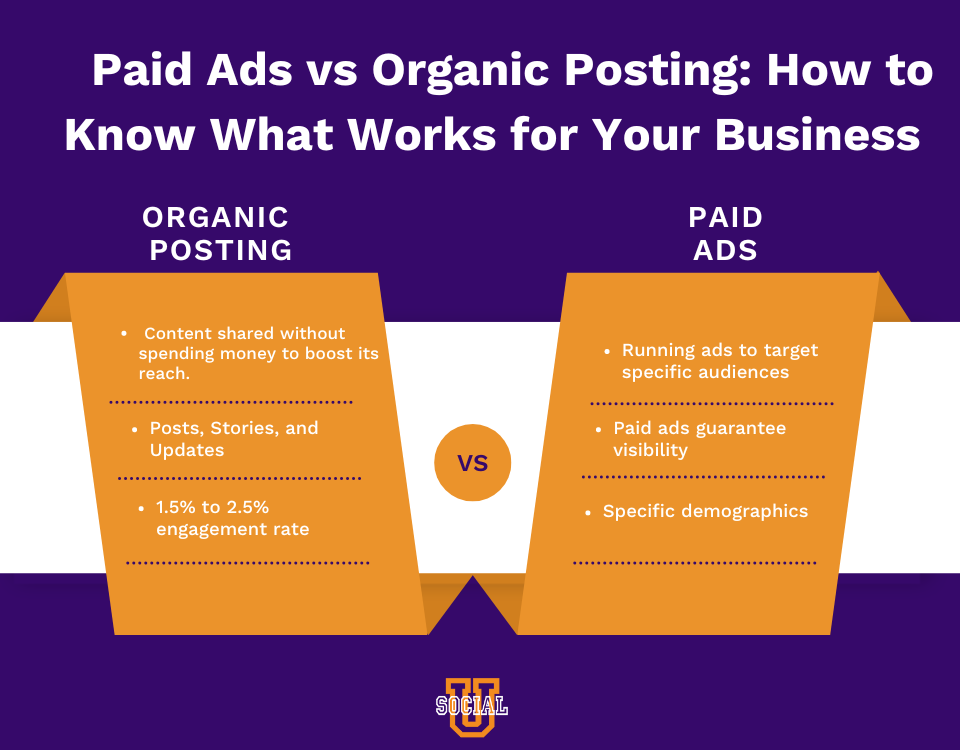
 In the dynamic world of social media marketing, understanding whether to invest in organic posts or paid ads can significantly impact your business. Both methods have their merits, but knowing when and how to utilize each can make all the difference. Let’s break down the pros and cons of organic versus paid social media posting to help you make informed decisions.
What Is Organic Social Media Posting?
Organic social media refers to any content shared without spending money to boost its reach. This includes posts, stories, and updates that appear naturally in your followers’ feeds. The average engagement rate for organic posts on Facebook hovers around 1.5% to 2.5%, which may seem low, but it’s not without benefits.
Benefits of Organic Posting
- Improved Brand Awareness: Consistent, engaging content helps keep your brand top of mind. When you regularly appear in your audience’s feeds, they’re more likely to remember your brand when they’re ready to make a purchase.
- Better Customer Care: Engaging with customers directly through comments and messages enhances customer satisfaction. According to Sprout Social, 51% of customers recall brands that respond to their queries, emphasizing the importance of interaction.
- Authenticity: Organic posts often feel more genuine. Sharing behind-the-scenes content, bloopers, or unfiltered moments can build a more authentic connection with your audience.
- Timeliness: Organic posting allows for more immediate and flexible responses to current events or trends. This agility is crucial for addressing breaking news or spontaneous opportunities.
How to Optimize Organic Posting
- Leverage Popular Formats: Short-form videos are currently the most engaging format across platforms like TikTok and Instagram. Incorporating these into your strategy can enhance visibility and interaction.
- Encourage Employee Advocacy: Feature your employees in your posts. Consumers are more likely to connect with a brand when its employees share content, making your brand seem more personable and trustworthy.
- Utilize Analytics: Regularly review your analytics to understand what content resonates with your audience. Focus on formats and topics that generate the most engagement and adjust your strategy accordingly.
- Embrace Trends: Stay relevant by incorporating current trends into your content. Whether it’s a trending topic or popular meme, timely content can boost engagement and visibility.
- Build Your Community: Focus on cultivating a loyal, engaged audience rather than just increasing follower count. A smaller, active community is often more valuable than a large, disengaged one.
- Feature User-Generated Content: Highlighting content created by your customers can be highly impactful. User-generated content often feels more authentic and trustworthy, leading to higher engagement and conversion rates.
What Is Paid Social Media Posting?
Paid social media involves running advertisements to target specific audiences for a fee. Unlike organic posts, paid ads guarantee visibility and can be tailored to reach very specific demographics.
Benefits of Paid Posting
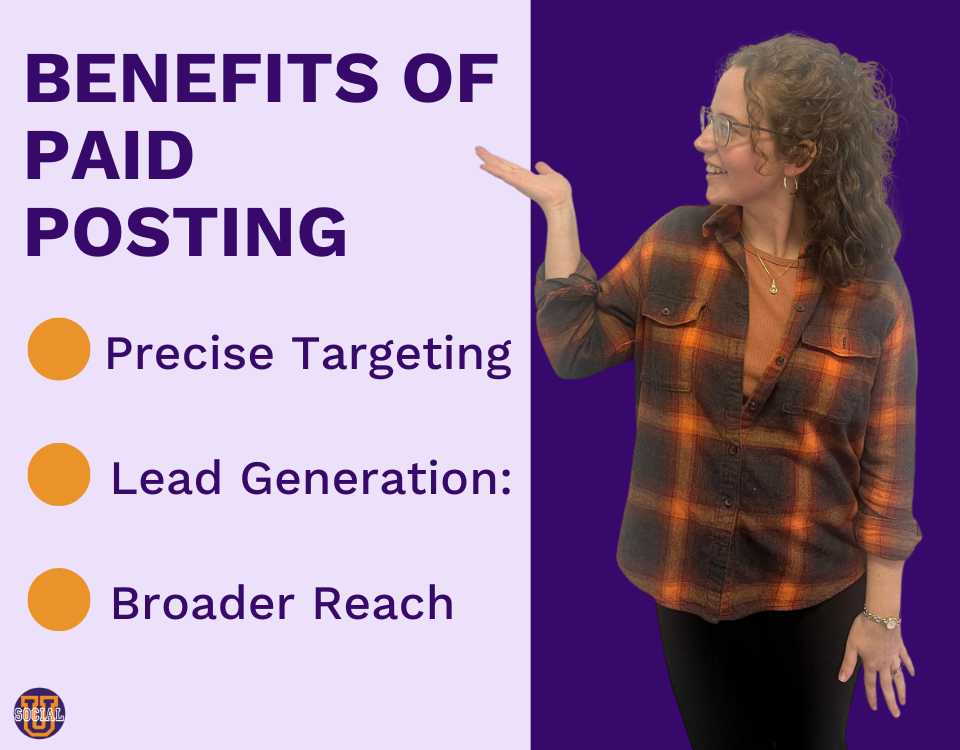
- Precise Targeting: Paid ads allow you to target specific audiences based on factors like age, location, and interests. This precision helps ensure that your content reaches those most likely to be interested in your products or services.
- Lead Generation: Paid ads can be highly effective for growing your email list or generating leads. By directing traffic to landing pages or sign-up forms, you can build a more substantial and qualified audience.
- Broader Reach: Organic reach can be limited, with many posts only reaching a small fraction of your followers. Paid ads, however, can significantly expand your audience, increasing the chances of engagement and conversion.
- Better Conversion Tracking: Paid ads offer advanced analytics and tracking capabilities. This allows you to measure the effectiveness of your campaigns and make data-driven adjustments to optimize performance.
Combining Organic and Paid Strategies
The most effective approach often involves a combination of both organic and paid strategies. Organic posts help build long-term brand loyalty and authenticity, while paid ads offer immediate visibility and precise targeting. By integrating both methods, you can leverage their respective strengths and minimize their weaknesses.
If you’re just starting with paid ads, remember that it takes time to refine your strategy and see results. Don’t be discouraged by initial challenges; use the data to improve and adjust your approach.
Get Started with Our Free Resources
To help you navigate the world of social media marketing, we’ve created a free infographic titled “To Boost or Not to Boost: Which Ad Works for You?” This resource outlines the benefits of both organic and paid posting, providing a clear overview to guide your decisions. Additionally, sign up for our 8-week course that will transform you from a social media spectator into a confident, results-driven business owner. We’ll dive into Facebook, Instagram, YouTube, LinkedIn, TikTok, Email Marketing, Content Marketing, and a technical Q&A. Until next time, keep engaging and growing your brand!

0 Comments